


Rita R. Colwell, Ph.D.
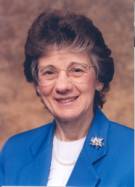
Rita R. Colwell, Ph.D., a remarkable marine scientist and educator, greatly contributed to the research and knowledge of cholera bacteria in the field of marine microbiology and biotechnology. Much of her research focused on the effects of bacteria on the Chesapeake Bay, in deep seas, and recreational waters. Her studies aided researchers in predicting cholera epidemics and the prevention of it worldwide, saving millions of lives.
She was born Rita Rossi on November 23, 1934, in Beverly, Massachusetts, the seventh of eight children to Louis and Louise Rossi. Colwell earned a Bachelor of Science in Bacteriology (1956) and a Master of Science in Genetics (1957) from Purdue University, Indiana. Colwell married Jack Colwell, a physical chemistry graduate student at Purdue (1956), and they had two daughters. She received her Ph.D. in Oceanography from the University of Washington (UW) under John Liston in 1961. After graduation, she stayed at UW as a research professor until 1964.
Soon after, Colwell went to teach at Georgetown University, during which she and her research team discovered that the bacterium that causes cholera was found naturally in the areas of the Chesapeake Bay. In 1972, she became a professor of microbiology at the University of Maryland, College Park (UMD), and later became a Distinguished University Professor at the Institute for Advanced Computer Studies (UMIACS). In 1977, she was named director of the UMD’s Sea Grant Program, the first woman to be appointed as director. Through her involvement and research, Colwell discovered various causes of bacteria, including from oil spills, different types of bacteria, including bacteria vibrio, and the impact of bacteria on the Chesapeake Bay, which affects the oyster population and causes infections and diseases.
President Ronald Reagan nominated Colwell to the National Science Board and she would later become the 11th director of the National Science Foundation (1998-2004). In 2008, she founded the company, CosmosID, a bioinformatics company, and served as global science officer and chairman of the board. In addition to her various positions and advisory roles, Colwell authored and edited over 19 books, hundreds of papers and articles, and founded the GeoHealth scientific journal in 2015.
In addition to these many accomplishments, Dr. Colwell devoted much of her time to raising public awareness of the importance of scientific research in Maryland and its many positive applications for the environment, economic competitiveness, and medicine. Her vision and commitment were critical to creating the Maryland Biotechnology Institute (1985), comprised of five centers to encourage scientific innovation and commercial applications around the State. Her lectures to audiences worldwide have garnered international recognition for the Maryland Biotechnology Institute and the sophistication of Maryland science.
Colwell negotiated and established an agreement between the University of Maryland and the University of Tokyo recognizing "the need for mutual close cooperation in the fields of zoology, botany, microbiology, and molecular genetics to promote the development of marine biotechnology, which is expected to serve human welfare in the future."
As a result of Dr. Colwell's hard work and reputation as an internationally acclaimed scientist, the Institute's Center of Marine Biotechnology (COMB) competed successfully for a seven-million-dollar U.S. Navy grant. COMB became based at the Rita Rossi Colwell Center, named in her honor in Baltimore’s Inner Harbor.
Colwell’s numerous awards and honors illustrate her commitment and tremendous enthusiasm in communicating to International lay and professional audiences the importance of marine science research in Maryland. She believed it was important to increase education in students grades K-12 to help promote more women and minorities in the science and engineering fields.
“We need to ensure that we train and educate students to be investigators to deal with the world's problems. We have so much potential in America. It is our duty to devote ourselves to science to make the world a better and safer place for everyone." - Rita R. Colwell, Columns (1999)
Biography courtesy of the Maryland Commission for Women, 1991; updated 2023.