


Rachel Carson
1907-1964
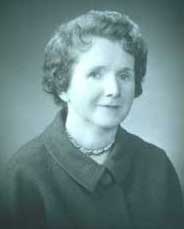
Rachel Louise Carson was a marine biologist, author, and ecologist credited with advancing the global environmental movement. Her most influential book, Silver Spring (1962), encapsulated her life-long dedication and concern for the preservation of nature and the prevention of the adverse effects humans have on the natural world.
Carson was born on May 23, 1907, to Robert W. and Maria F. Carson on a family farm in Springdale, Pennsylvania. She spent her childhood exploring their 65-acre farm and reading and writing stories. Carson attended Pennsylvania College for Women (now Chatham University), majoring in English with a career in writing in mind. Two years later, in 1928, a required course in biology changed her mind, and she became a zoology major. Later in life, she combined the two fields and became an influential force in the ecology movement.
After graduating with a master's degree from Johns Hopkins University in 1929, Carson started teaching zoology at Hopkins before leaving to find full-time work to help support her family during the Great Depression. In 1935, Carson began working part-time for the U.S. Bureau of Fisheries, writing radio copy for a series of weekly educational broadcasts, Romance Under the Waters. Carson also wrote articles on aquatic life for The Baltimore Sun to supplement her income. In 1936, she became the Editor-in-Chief for all U.S. Fish and Wildlife Service publications and the second woman hired by the Bureau for a civil service appointment as a "Junior aquatic biologist." Carson resigned from her positions in 1952 to devote her time to her writings.
Her first book, Under the Sea Wind: A Naturalist’s Picture of Ocean Life (1941), is recognized as an exemplar of American nature writing. Her prize-winning book, The Sea Around Us (1951), became a best seller for its poetic writing and scientific exploration of the sea and the creatures who live there. It won both the 1952 National Book Award for Nonfiction and a Burroughs Medal in nature writing.
Her most famous and controversial work, Silent Spring (1962), was called by Justice William O. Douglass "the most important chronicle of this century for the human race." In Silent Spring, Carson warned against the indiscriminate use of chemicals upsetting the balance of nature and challenged people to rethink their view of the natural world. The book prompted a controversy among conservationists, the chemical industry, and the Department of Agriculture. Carson testified before Congress in 1963, calling for new policies to protect human health and the environment. The American Chemical Society designated Silent Spring as a National Historic Chemical Landmark in 2012.
Many awards came to her in the last year of her life, among them was her most treasured, the Cullum Medal of the American Geographical Society in 1963, which was awarded to only three other women at that time. Following Carson’s death from breast cancer in 1964, she received many posthumous honors including the Presidential Medal of Freedom (1980); the founding of the Rachel Carson Center for Environmental and Society (RCC) in her name in Munich, Germany; her home Rachel Carson Homestead becoming a National Register of Historic Places site (1975); an installation of a statue in Waterfront Park in Woods Hole, Massachusetts in 2013; and several other awards and honors.
“What is important is the relation of man to all life." - Rachel Carson
Biography courtesy of the Maryland Commission for Women, 1985; updated 2023.