Understanding Maryland Records
Letters and Writing
Every writer of records
had his own style of handwriting and frequently it is necessary to study
letters very carefully and find them in other words on the page in order
to decipher a specific word or passage. The interpretation of unfamiliar
handwritting becomes easier with practice. Some letters, however, were
commonly written in a way quite unlike the way we write them in modern
times.
Questions regarding Archives' collections and services should be directed
to the Reference Services Department at:
msa.helpdesk@maryland.gov
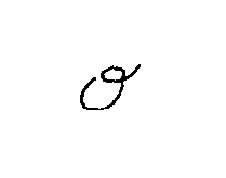
was a small "e" in
records up to the mid-1700s; small letter "o" was written as it is now,
with no loop.
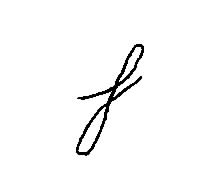
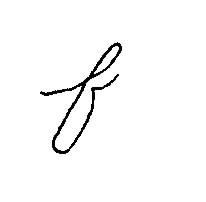
was a "long s." Note
that it looped to the left after the downstroke and that "f" looped to
the right. Words frequently contained both a regular "s" and a "long "s."
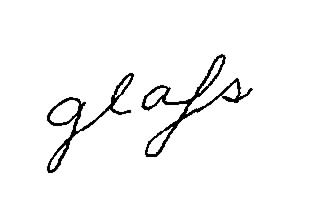
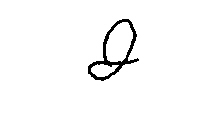
was a single letter,
a capital "I," but it was also used for what we call a capital "J."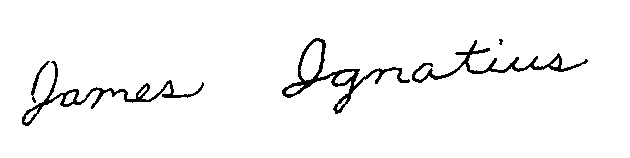
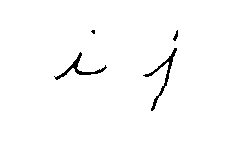
The small letter "i,"
for reasons that are not clear, had both a vowel and a consonant form.
"J" was the last letter
added to our alphabet. "I" was the vowel only and "J" was the consonant.
The capital "J" was written by simply dropping the second loop below the
line, more in keeping with the small "j."
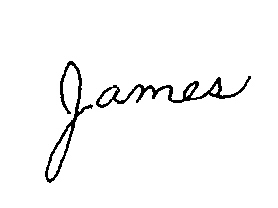
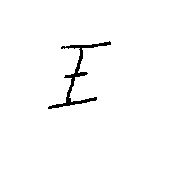
was the capital I/J
when printed by hand. It appears in records in the alphabetized index headings
- A B C D E F G H I K L - and was often used as a mark on ship
cargoes to identify the owner. It also appears on deeds and other documents.
Sometimes men who did not know how to write their full names and had a
name beginning with "I" or "J," learned to make one of its initials, either
the first or the last, and used "I" as a mark.