
| August, 2002 |
|


The art of AT: Listening to the need
Every so often we are struck with a moment of genius, a minute when suddenly the answer to a problem is revealed. Some call these the Aha moments. They can be found in the simplest of solutions or buried in the deepest complexities of experience. And, for some, those Aha moments surface out of necessity. Of course, they all require a bit of creativity as well! For Mark Cobb, (also known as Jeff Cobner), those moments of genius usually entail tweaking a gadget or rewiring a widget when he takes everyday technology and turns it into ingenious assistive technology.
Mark Cobb is a 25-year-old Business Administration major at a community college in Richmond, Virginia. He is presently working on his associate degree and plans to get his BS in IST. However, what sets Mark aside from the run-of-the-mill college student is not only his ability to create new gadgets out of old ones, in particular, take everyday technology such as a baby monitor camera and turn it into a CCTV (a device which enlarges text), but his ability to do this while overcoming numerous disabilities which could, and likely would, hinder most other's ambitions.
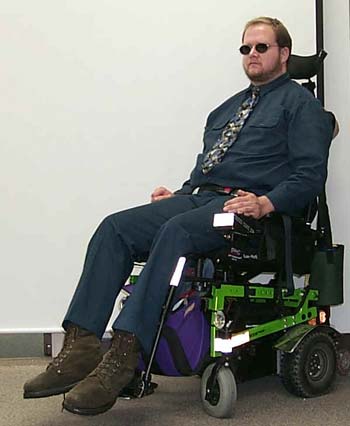
Mark Cobb was born with Marfans disease, a connective tissue disorder that affects the organ systems, including the lungs, eyes, heart and more. For Cobb, the disease has taken numerous tolls on his body, including degenerating his vision and his ability to walk. But this has not hindered him from following his passion. After graduating from high school he joined a rehab program, which didn't prove very helpful to him. He finally decided to have a college assessment and was accepted into a local community college. Now he maintains his own website, featuring a large gamut of newly created assistive technology and documented modifications, www.wheelchairmodifications.org.
From vacuum tubes to transistors, Cobb has always been fascinated with how things work and how they are assembled. As a young child he replicated devices from books. Now, as an adult, he dreams of creating a device that uses artificial gravity to allow someone in a wheelchair to float down steps. But with the ever-changing currents of his disease, Cobb finds himself adjusting and adapting, "I have had many goals and they change each time my disability changes." Yet, it is out of this change and out of his ability to overcome physical obstacles that has led him down the path that he is on.
 D.
D.
Mark Cobb
Technology, being what it is today, does not come cheap. And when you are living on a limited budget, it is often even more difficult to acquire the assistive technology that one needs. For individuals with disabilities, coming up with the money to buy various assistive technologies can be more difficult and frustrating than anything else. Just the prices of existing devices on the market alone can be daunting. Cobb, dealing with his own visual and budget restraints, decided to use his talents to make his life easier, "I have a disease that required me to use an electric wheelchair and with my limited eye sight and limited budget, things just for my needs are hard to find." Through creating a portable CCTV that can be worn around the neck to wheelchair modifications, his inventiveness has unlimited boundaries.
When Mark Cobb was growing up, he had many dreams. But none seemed to take hold of him the way inventing did. "While in a rehab center, I met the rehab engineer and discovered what he did, how he did it, and while attending the rehab center, I worked with the engineer and a quad to make a joystick useable for him... It looked like something I could do and by slowly talking to the other disabled people, I discovered a need for things that didn't exist. I always played with electronics...I never thought much of it. It was just something I did when it rained out." Now, Cobb fills his home with books, leftover pieces of wire, batteries, and more as he spends his time studying and creating.
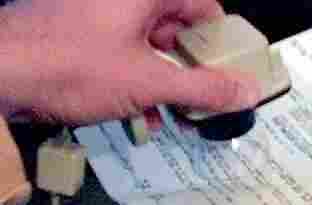
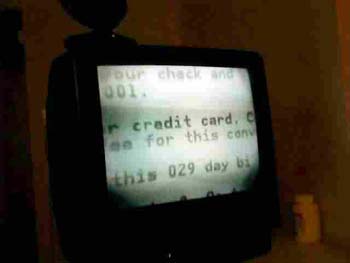
During a recent online conversation, I asked Mark what his favorite invention was and why. This is what he had to say:I can Narrow it down to two. It's the converter on my wheelchair that allows me, or for that matter anyone, use the battery power in their electric wheelchair to power things by drawing energy from the charger port...The second is my wearable CCTV. I use that a lot. I wear it around my neck, adjust the 6 inch LCD screen in front of me, then place the modified baby monitor camera in my left hand, place my book on my left side, my notebook on the right side and start reading and writing notes as I go.
Though Cobb claims to have a habit of over-engineering, his creations turn out to be quite helpful to both himself and those who access his website for inspiration. And his website just might be the way he will change others lives. Through providing instructions, pictures, and a variety of ideas, Cobb is not only offering people a cheaper alternative to market devices, he is also providing them with the inspiration of a creative mind who does not let physical barriers stand in the way of what he wants to achieve.
 D.
D.
One of Mark Cobb's inventions- a handheld magnifying
CCTV made out of a baby monitor camera.
 D.
D.
Cobb's CCTV at work.
It is hard to determine where Mark Cobb's life will take him; the life of an inventor is never predictable. But his intentions will remain the same, regardless of where he goes or what he does, "I will use my degree and knowledge to start my own business and give back to the community by making things and hiring other disabled people."
